The Issuu alternative that's serious about selling


Not all digital catalog software is the same
With more than 50 catalog and flipbook solutions on the market, most fall into one of two categories:
Issuu's catalog features center on links and videos that send readers on to your webshop, which puts it closer to the passive group for a retailer. iPaper is built for the second.
iPaper is the Issuu alternative for marketers who:
- Let shoppers check out directly from the catalog
- Publish catalogs on a weekly or seasonal rhythm
- Want automation to handle the repetitive work
- Track catalog visits next to the rest of their marketing analytics
Try the automation yourself in our interactive demo
Issuu vs. iPaper compared: what is the difference?
Both platforms turn PDFs into mobile-friendly flipbooks with links and video, and both let you embed them on your own site. The difference is in selling: iPaper connects the catalog to your product data and lets shoppers add products to a basket and check out without leaving it.
Issuu is built around publishing and reach. You can upload PDFs, Word files, presentations or images, embed the result, share it in fullscreen and get found by the millions of people who browse Issuu each month. Issuu can also turn a publication into social posts, articles and GIFs. For catalogs, it adds shoppable links and videos that take readers to your product pages. Product feeds, a basket and checkout aren't on its public plans, so the buying happens on your webshop.
iPaper is built for being shoppable and automated, Start from the PDF you already make on Flipbooks: enrichment automation adds product links for you, and shoppers can fill a basket and check out by WhatsApp or email inside the catalog.
Or skip the layout work altogether with Horizon. It builds the catalog from your product feed using rulesets and page templates, so new products, prices and offers land without anyone rebuilding pages.
Why switch to iPaper?
Let shoppers buy inside the catalog
Links to the webshop is a good start, but every click out is a chance to lose the shopper. With iPaper, shoppers can add products to a basket inside the catalog and check out by WhatsApp, Viber or email, or send the basket to your webshop through shop export or a JavaScript integration.
Automate the repetitive work
If you publish a new catalog every week or month, most of the work is the same each time.
On Flipbooks, enrichment automation adds product links and data to your PDF for you, product data is processed daily, and scheduling on all plans lets you line up catalogs to go live on their dates.
iPaper Horizon goes even further: it builds pages from your product feed with rulesets and page templates.
Automate first, design after
Automation gets you most of the way, and you still have the final say.
On Flipbooks you adjust enriched products in the editor.
On Horizon you move products, resize offer fields, add pages and change layouts on top of the generated catalog.
Unlimited users on all plans
Every iPaper plan, on both products, includes unlimited users, so the whole team can work in the same catalogs. On Issuu, multiple users are behind a team plan.
A setup built around your business
You don't have to figure out the setup alone. Flipbooks includes personal onboarding and an implementation specialist from Commerce Plus, and every Horizon plan comes with setup help. The Horizon trial is set up by iPaper with your own product feed and brand.
JYSK, one of the biggest retailers in Scandinavia, put it well:
iPaper is constantly focusing on optimizing features and highlighting business opportunities."
Read the full JYSK customer case here.
Track catalog visits and performance
Every iPaper catalog comes with built-in statistics, so you can see how shoppers engage without extra setup. You can also connect your own analytics, such as GA4, so catalog activity sits right next to the rest of your webshop data. Cross-domain tracking follows shoppers from the catalog into the webshop, so you can see which catalog visits turn into sales.
Danish online retailer 10-4 compared webshop sessions from visitors who used an iPaper catalog with sessions from visitors who didn't. Biased as we are, the results speak for themselves.
Is iPaper the right Issuu alternative for you?
Issuu is a strong fit for publishers, magazines and creators who want reach. Its platform puts your publication in front of millions of monthly readers, it takes Word files, presentations and images as well as PDFs, and it can turn one publication into social posts, articles and GIFs. It also has a free plan and a low-cost entry plan.
Consider iPaper when you:
- Sell products and want the catalog to drive webshop sales, not just readership
- Want a basket and checkout inside the catalog
- Publish recurring catalogs and leaflets on a fixed cadence
- Need the whole team working in the same account
If you want to scale catalog production without scaling the manual work, that's where iPaper fits.
See how iPaper works with your workflow
The best way to compare catalog platforms isn't counting checkmarks. Bring your current PDF, product feed or recurring campaign workflow and see how iPaper handles it.
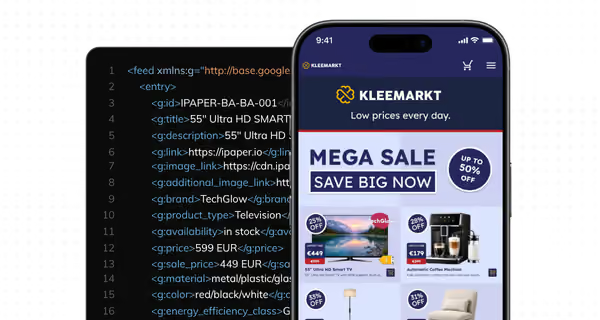
Start from product data
Build shoppable catalogs from your webshop's product data. Products are added and updated automatically.
Get started with iPaper Horizon
Start from a PDF
Upload your PDF and make it shoppable, with links to your webshop or checkout in the catalog.
Get started with iPaper Flipbooks
FAQ
Is iPaper a good alternative to Issuu? Yes, if you're a retailer who wants your catalogs to sell, not just get read. iPaper connects catalogs to your product data and webshop and adds a basket and checkout inside the catalog. If you mainly want a publisher, Issuu's platform is built for that.
What's the main difference between iPaper and Issuu? What happens after someone opens the catalog. Issuu is built to publish and distribute documents, with links out to your webshop. iPaper includes feed-built catalogs, automated product links, an in-catalog basket and checkout.
Can I move my Issuu catalogs to iPaper? Yes. Upload the original PDFs to iPaper and they become interactive catalogs, ready to add product links and publish.
Do I need an enterprise plan to automate catalog production on iPaper? No. Automation is part of our standard plans, whether you build catalogs from your product feed or start from a PDF. As your production grows, higher plans give you more capacity.
Can iPaper create a catalog without a PDF? Yes. iPaper builds digital-first catalogs directly from a product feed using templates and rulesets.
Does iPaper have shopper analytics? Yes. Both products include built-in statistics such as views, time spent and clicks, and you can connect Google Analytics 4. Cross-domain tracking follows shoppers from the catalog into your webshop.
Can I try iPaper before I switch? Yes, both ways of working offer a free 14-day trial. Starting from a PDF? Start a free Flipbooks trial and turn an existing PDF into an interactive, shoppable catalog. Want to build from product data? Request a free Horizon trial and we'll set up your account with your product feed and brand.
Continue Reading
The Flipsnack alternative for retail marketing teams

The Publitas alternative for scaling catalog production
How would shoppers react to the death of print?
Your catalogs will be in good hands
- We have over 20 year’s experience working with digital catalogs
- Our dedicated team of experts are on hand to guide you to success