How would shoppers react to the death of print?


Printed promotions, such as catalogs and leaflets, are still widely used by shoppers and affect shopper behavior.
However, printing and distribution of print is extremely expensive. And the recent supply chain issues and inflation are only making it worse.
So, many retailers still consider reducing print and finding a suitable digital alternative.
But doing so without knowledge of how shoppers would react to the death of print would be risking brand loyalty and, in the end, revenue.
To enable retailers to make informed decisions based on real-world feedback, we asked more than 7.000 shoppers in eight European countries about how they would react to the death of print.
Here are three of the main questions and answers:
Question 1: Do shoppers see mainly benefits or drawbacks of dropping print?
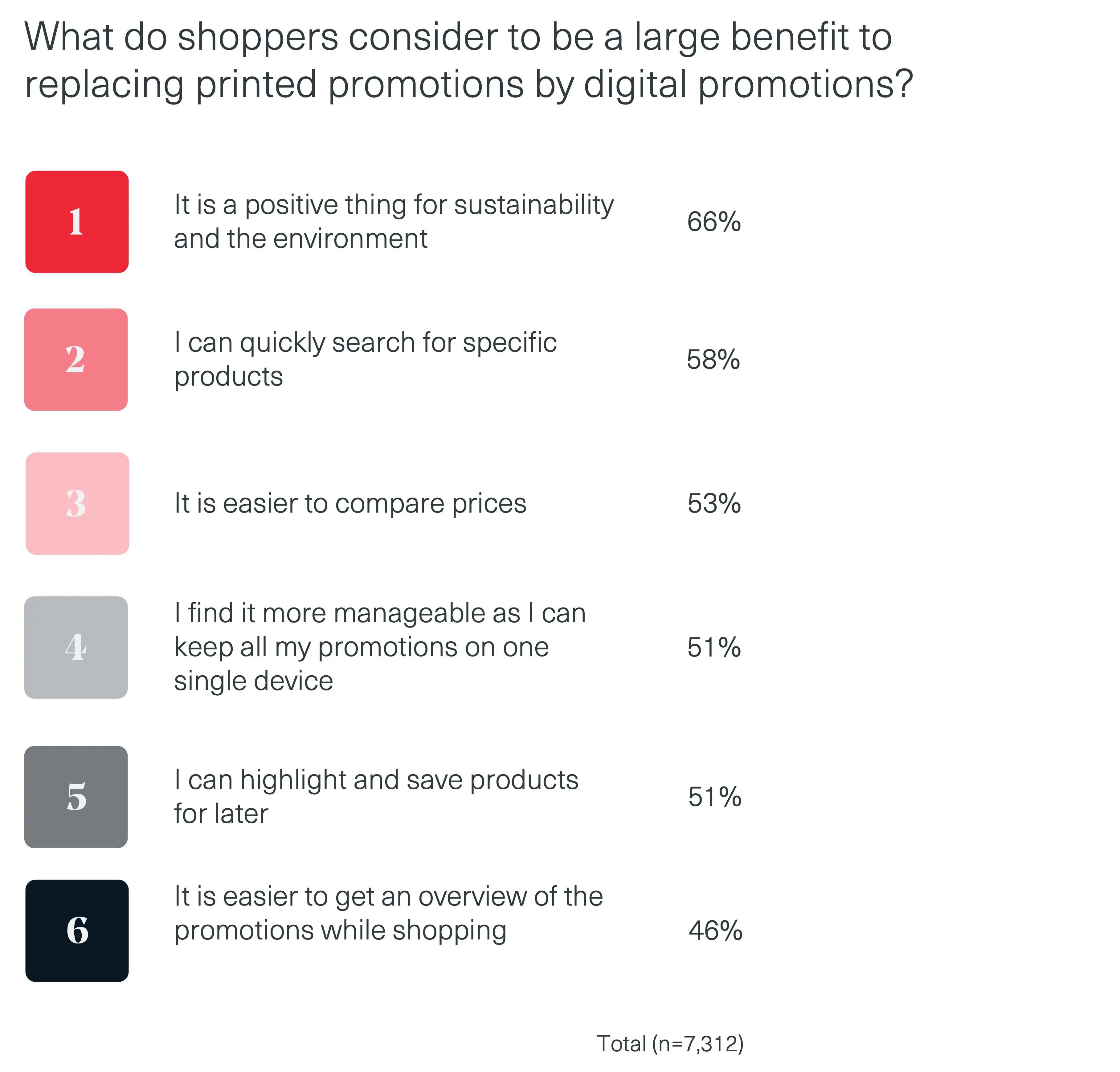
Shoppers recognize the benefits related to dropping the printed promotions:
66% agree that it would be beneficial for the environment. Even the least valuable benefit is recognized by 46% of shoppers.
On the other hand, shoppers also have concerns:
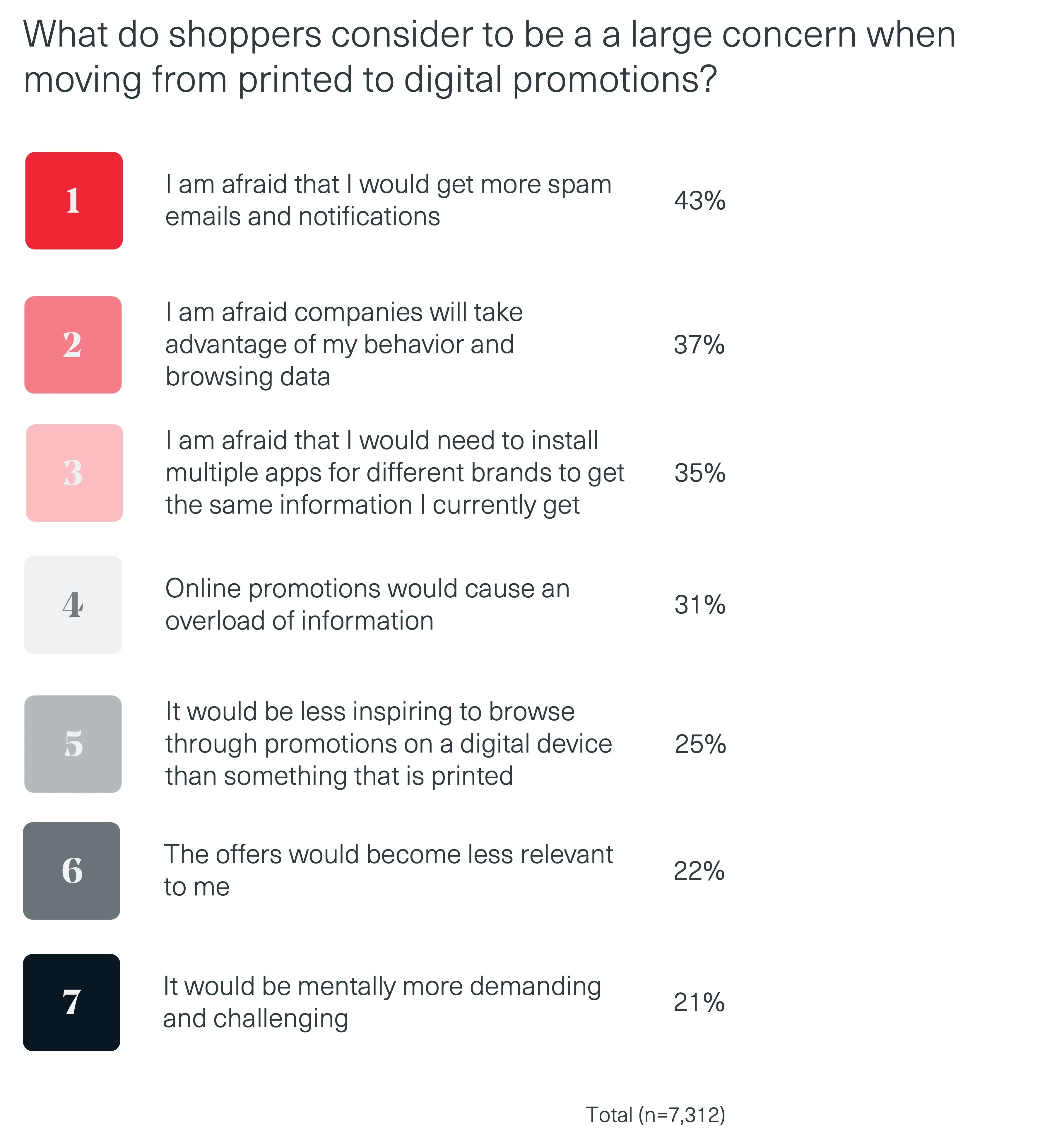
43% of shoppers are concerned that more digital promotions will increase the amount of spam and notifications they receive.
Almost 4 out of 10 are afraid of their data being commodified by companies and having to install multiple apps, which potentially increases complexity for the shopper.
Q2: Would shoppers miss printed promotions?
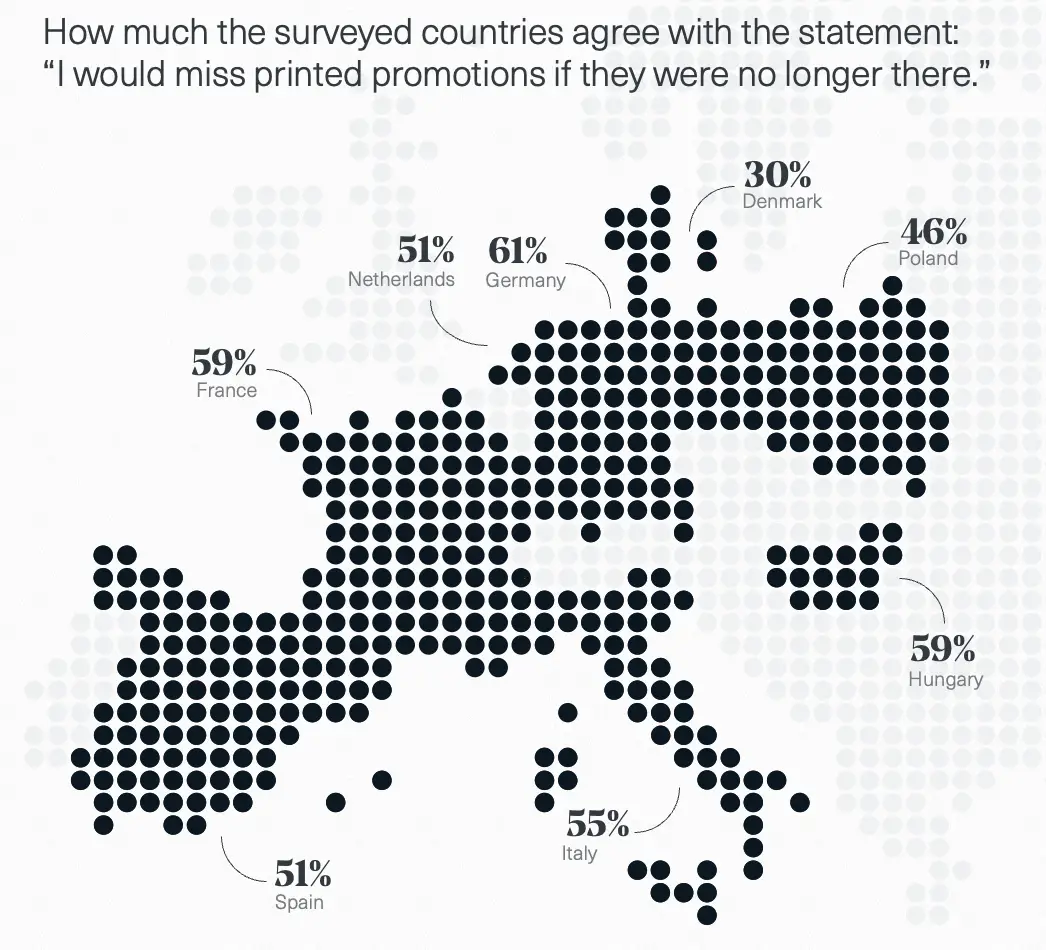
The death of print would be a loss to many shoppers.
52% of respondents agree that they would miss the printed promotions. Only 26% of respondents actively disagree with this statement.
Shoppers from all countries, even though with low usage of print, state that they would miss printed leaflets and catalogs if they were gone.
Q3: Would the death of print affect shoppers’ search for information about deals, prices and products?
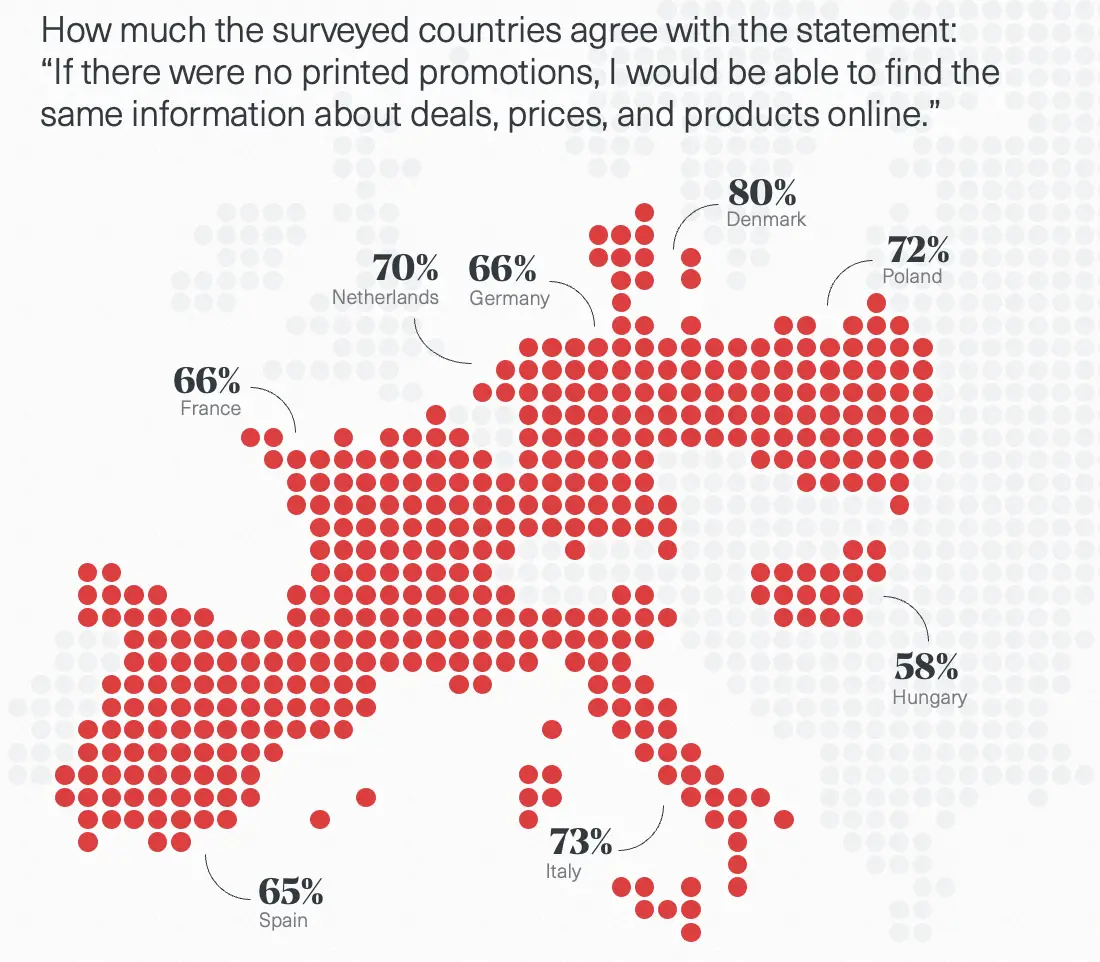
For many shoppers, it wouldn’t be a problem to find the same information online. Printed catalogs and leaflets seem to be less important in terms of purely information search.
69% of respondents agree they would be able to find the same information about deals, prices and products online if there were no printed promotions. This finding is even consistent among young and old shoppers.
In summary…
There’s two major take-aways from this:
1. Shoppers see clear benefits to dropping printed leaflets, but they also have concerns.
So, if retailers transition away from print, they should focus their communication strategy on the benefits and reassure the concerns.
2. Although shoppers believe they could find the same information without print, they also agree that they would miss printed promotions.
This means that killing print would impact the shopping experience, but not solely in terms of practical information search.
Instead, it’s about emotional connection to the format – either due to tradition, culture, habits or something else.
So, if a retailer decides to reduce or drop print?
Then they must ensure that digital replacements feel like a proper replacement to shoppers.
Where do retailers go from here?
The thing is, the above naturally begs the question: Which digital channels do then feel like a proper replacement of print to shoppers?
Basically, which channels would shoppers go to if there was no print?
We also asked the shoppers those questions!
Download the full European Shopper Survey 2022 here to get all the answers!
Continue Reading
How different generations interact with catalogs
Why most retailers' digital transformations fail
Re-thinking the analog mindset in retail
Your catalogs will be in good hands
- We have over 20 year’s experience working with digital catalogs
- Our dedicated team of experts are on hand to guide you to success