The challenge of product curation in ecommerce


Broadly speaking, there are two types visitors to an ecommerce:
Buyers know what they’re looking for. They might have a product, category, brand, feature or price range in mind.
Shoppers are still exploring. They’re ‘just looking’, considering their options and browsing to see if something catches their attention.
Most ecommerce websites are built for the first group. The problem is that buyers make up just 17% of visitors. The other 83% are shoppers.
There's a gap in the ecommerce funnel
Retailers have spent years getting better at the top and bottom of the ecommerce funnel.
At the top, they’ve created landing pages, buying guides, articles and other content designed to attract attention and introduce people to a brand, category or idea.
At the bottom of the funnel, there are category pages, filters and product pages. They're there to help narrow things down and buy.
The problem is what happens – or, rather, doesn’t happen - in between top and bottom of the ecommerce funnel.
Here’s a broad, non-controversial way to split the ecommerce funnel and the formats commonly used for each part:
1. Attraction → Landing pages and home page
2. Inspiration → ?
3. Intent → Filter pages
4. Conversion → Product pages
Buyers are relatively ‘easy’: They know what they want – ie. they have intent – so they can go straight to filter and product pages.
But a shopper starts at… well, at the beginning.
Shoppers’ paradox of choice
A shopper might read a guide about getting their garden ready for summer. They're interested.
But sending them directly from a landing page to a filter page with 387 garden products and a row of filters is… not ideal.
Too much choice can quickly become overwhelming, resulting in decision fatigue. Which category matters? Which products go together? What should they even be looking for?
Online shoppers need to be guided and inspired to connect attraction to intent and conversion.
The way to do that is with product curation.
“Product cura-what?” IKEA excels at it, ecommerces don’t
A good way to explain product curation is IKEA:
You walk through carefully curated rooms where products are put into context and shown together. You’re guided through the maze. You can take your time, learn and be inspired.
And, once you've decided what you like, then you head downstairs to the warehouse and find the products on the shelf and buy them.
So, product curation is:
The result of product curation is a tailored shopping experience that simplifies decision-making and connects attraction to intent and conversion.
Keeping IKEA in mind as an example, try to ask yourself:
- Have ecommerce skipped the digital showroom?
- Did we forget about the 83% who need inspiration with product curation?
- Are you sending all shoppers to an online warehouse with endless lists of products?
The data suggests that, well… yes.
And the responses from 6.347 consumers are clear: They want you to fix it.
Don’t just take it from us, believe your target audience
In iPaper’s ‘The Rise of Curation in Online Shopping’ we surveyed 6.347 consumers together with the Danish research company Epinion.
Here are the main results:
- 93% of shoppers find online shopping overwhelming
- 67% wanted inspiration when shopping online
- 62% said curation made the shopping journey simpler
The data was subject to weighting, aligning with each country’s respective demographic distribution in terms of gender, age, and region. Data quality checks were performed and validated by Epinion.
What consumers want most from online shopping was: “A simple, quick overview of products”.
So, there’s no question that shoppers want product curation online.
The question is, then, how do you add more curation to your ecommerce?
Online product curation = Many options and formats
You can do product curation online in many ways and formats. Here’s just a few suggestions:
- Shoppable inspiration galleries: Showcasing products in lifestyle imagery, such as complete outfits or styled rooms, where shoppers can explore and purchase.
- Curated email campaigns: Sharing selected products tailored to customer interests, seasonal trends or specific occasions.
- Personalized recommendations: Suggesting products based on shoppers' browsing behavior, purchase history or preferences.
- Interactive quizzes: Helping shoppers discover a curated selection of products based on their needs, style or preferences.
- Catalogs: Combines a curated selection of products in a familiar format with inspiring visuals, themes, and relevant context.
As iPaper specializes in catalogs, let’s use that as an example moving forward, shall we? But, keep in mind, what is described can apply, or be extrapolated, to all of the formats above for online product curation.
An example: Catalogs
A catalog is often more product-focused than a landing page, but more curated than a monotonous filter page with a standard product grid. With catalogs, you can combine a selection of products with category and context, themes and visual assets.
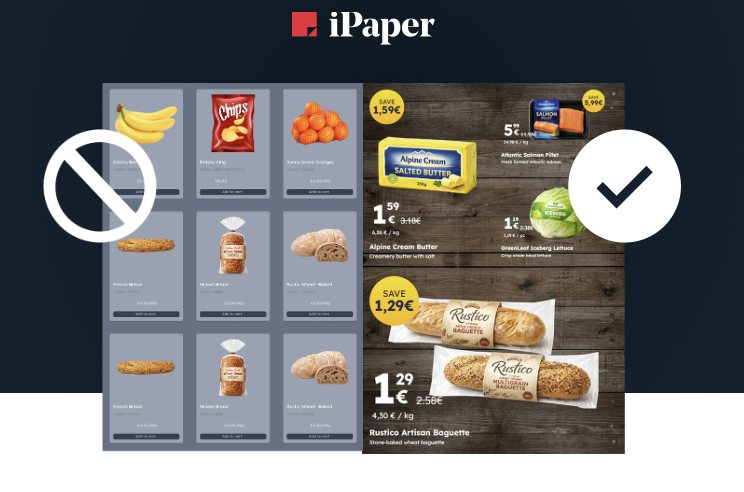
Here's a few different digital catalogs, so you can see for yourself:
Digital catalogs don't just show shoppers what they can buy. They help them discover why they might want to buy it.
And that's exactly what's missing between landing pages and filter pages on most ecommerce websites.
The catalog format is a visually appealing product experience that makes shoppers…
- Stay longer,
- See more products,
- And, finally, buy more.
But don’t just take our word for it.
The results of catalogs on ecommerce
10-4, a Danish retailer, looked at more than six million webshop sessions. Sessions that included a visit to a catalog had 5.1% higher basket values, 72.5% more time on site and 87% more pages per session than sessions without one.
On the other side of the world, Coppel, the 2nd largest Mexican retail group, increased sales attributed to catalog-like ‘campaigns pages’ by 300% and reduced bounce rate by 40%.
Unlike a static catalog or a landing page based only on filters, catalogs made with iPaper Horizon gives us the ability to tell a commercial story, prioritize the offer and make it more attractive, explorable and actionable.”
- Carmen Nuñez Verdugo, Editorial and Commercial Strategy Manager, Coppel
The results indicate catalogs work well in ecommerce. And you might’ve already guessed why…
Catalogs can be a bridge between landing pages and filter pages
Catalogs sit in that space between a traditional landing page and a filter page – between attraction and buying intent.
So, by using catalogs, the ecommerce funnel for a shopper looks like this:
1. Attraction → Landing pages and home page
2. Inspiration → Catalogs
3. Intent → Filter pages
4. Conversion → Product pages
When the ecommerce funnel looks like this – connected, logical and fitted to shoppers’ needs – it’s not a surprise to see the real-world results for 10-4 and Coppel.
What’s surprising is that there’s not more catalogs in ecommerce.
So why don't all ecommerces make catalogs?
Well, it’s complicated – or, it used to be.
A landing page can be evergreen: You put in a lot of work, and then you have it for a long time.
A filter page is fast and easy to make: You put in very little work, and then you have it for a short time.
Catalogs have traditionally been in an awkward middle ground: they’re more temporary than landing pages but require more work than filter pages.
But, if you’ve made it this far, you know that the role catalogs play in an ecommerce is important and necessary to the 83% of your target audience.
And the good news is that catalogs have never been easier and faster to produce.
How?
Using product data, existing assets and automation.
A new way to create catalogs
Your ecommerce already has a product feed. Why not use it to create catalogs?
Product information and images can come directly from your ecommerce feed and be automatically placed into preconfigured layouts and themes.
The result is a fast, easy way to create curated catalogs that fills the current gap in the ecommerce funnels.
We can now promote offers with a shorter lifespan because Horizon is more responsive. We can create campaigns at a lower cost with a one-week validity.”
- Eva Matoua, CMO, Conforama Switzerland
Summary
- 83% of ecommerce visitors are shoppers who are exploring, while only 17% are buyers and know what they want.
- Most ecommerce sites are built for buyers, moving people from landing pages straight to filters and product pages.
- This creates a curation gap where shoppers need inspiration and guidance before they’re ready to narrow down their choices and show buying intent.
- Catalogs fill that gap by presenting a curated, visual selection of products that can be the bridge between landing pages and filter pages.
- Automation makes catalogs scalable, using product feeds and existing assets to create and update them quickly.
Continue Reading
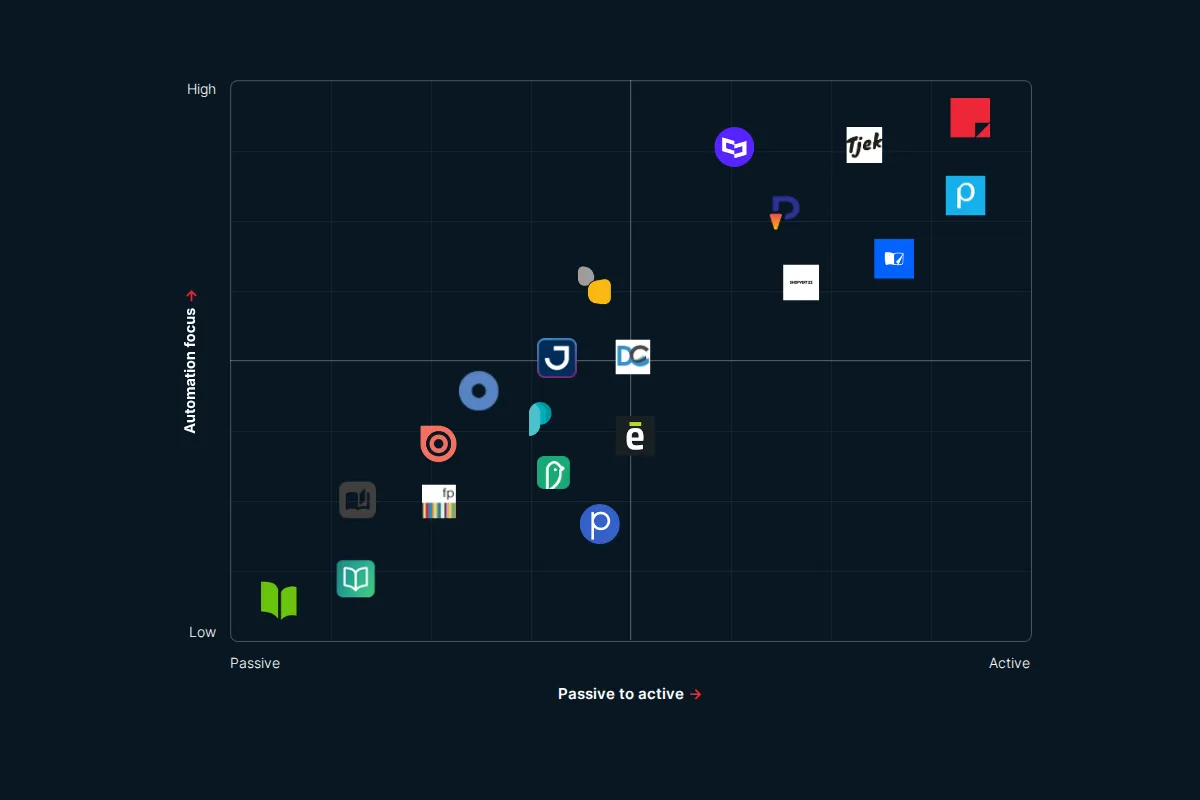
The digital catalog software landscape in 2026

The Issuu alternative that's serious about selling
The Flipsnack alternative for retail marketing teams
Your catalogs will be in good hands
- We have over 20 years experience working with digital catalogs
- Our dedicated team of experts are on hand to guide you to success